Closing the Gap: How a bursary took Luke from Bolton to Texas
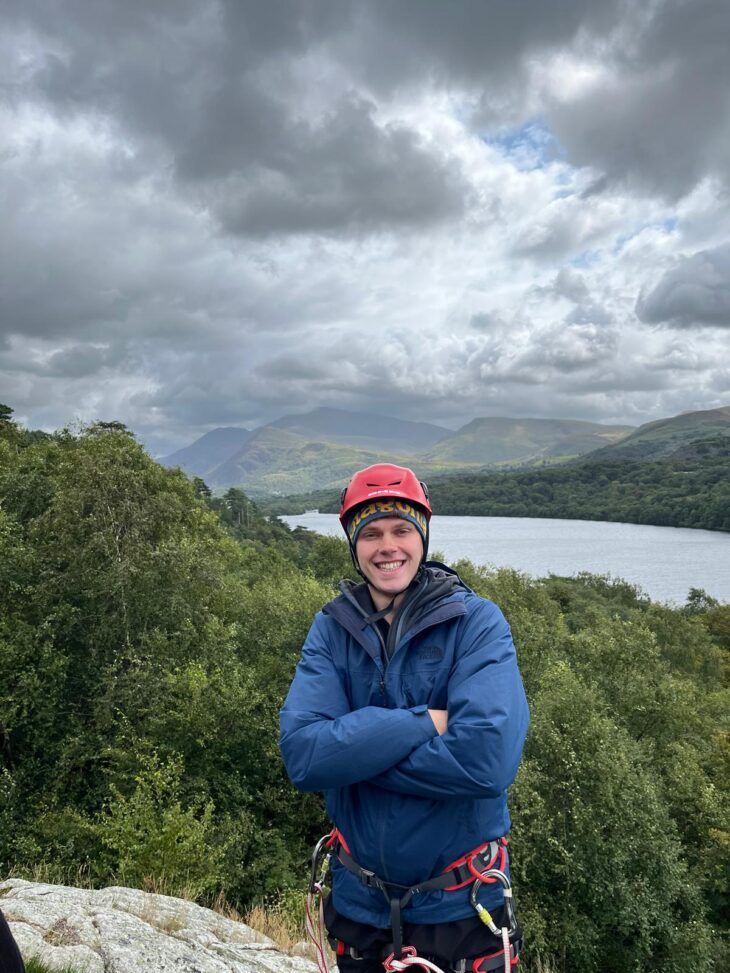
When the opportunity to study abroad during his final year arose, Luke—a DACA alumnus and Next Steps Bursary scholar—didn’t hesitate. Swapping Lancaster for Texas, the Physics with Astrophysics student has spent the last few months immersing himself in a new culture and a different way of learning. From academic shifts to lifestyle changes, and even adding a marathon in the mix. Luke gives us the inside scoop on his journey and offers his top tips for fellow students looking to broaden their horizons.
Texas is a world away from the UK. What has been the biggest “culture shock” that you’ve actually grown to enjoy?
The sheer scale of everything here was a huge shock at first — it is the biggest campus university in the world, with over 80,000 students. Driving really is the American way; this has made things relatively difficult having no car, but I manage to bike everywhere instead. I have really grown to love commuting by bike, passive cardio and a chance to be out in the sun daily. A&M also provides free bus services, so it is very accommodating when somewhere is too far too bike or just to carry shopping. Coming from Lancaster, nothing quite prepared me for just how vast Texas A&M is but I love it.
The weather has been another huge shift. Going from the grey drizzle of North West England to blazing Texas sunshine has honestly been a joy, and it’s pushed me to spend even more time outdoors than I did at home. I think good weather is such a positive mood booster for people, everything seems better when the weather is as good as it is here.
How does the environment in your US setting differ from your academic experience back home? Are there any specific “American” study habits you’re planning to bring back?
The academic culture at Texas A&M is noticeably more interactive than what I was used to at Lancaster. Lecturers actively encourage participation, and there’s less of a divide between students and staff —attendance actually counts towards my final grades here, which is definitely a big help in securing the top marks.
The assessment structure is also quite different. Back home, most of my modules are dependent on one big final exam, usually 80%, with only 20% going toward weekly homework. I personally find this very stressful, for example in second year, I had 11 exams across 3 weeks and despite months of revision prior, I still felt rushed and underprepared. As someone who loves a structured routine, I found it hard to keep myself balanced during this period.
Here, you’re assessed regularly throughout the year, with the distribution between exams and homework much more equal, keeping me consistently engaged with the material. As a physics student, I’ve found that this actually helps with understanding — concepts build on each other, and regular testing forces you to consolidate your knowledge as you go rather than all at once.
One thing that genuinely surprised me is the grading scale. In the UK, a 70% is a first-class mark but here, an A is a 90%. It has been a tough adjustment for me, with the work getting harder, especially as this year counts towards my degree, to ensure that I am still achieving the top grades. In the Fall, I achieved 4 A’s and I am on track to achieve the same this Spring.
Moving your entire life to the States for a placement is a logistical and financial mountain. Did the bursary help clear the path for you to say “yes” to this opportunity?
Honestly, without the bursary, I don’t think I could have said yes. A year abroad in the US isn’t cheap — there are flights, accommodation deposits, visa costs, insurance and the general expense of setting up life in a new country as well as a whole load of other hidden costs. The financial support from the Aldridge Foundation made the whole thing much more viable for me. It removed what would have been an insurmountable barrier and turned something that felt out of reach into something I could actually plan for and commit to. I have a lot of gratitude for the Aldridge Foundation in their continued support for my studies, allowing me to continue gaining new insights and experiences.
Knowing you had the backing of the Foundation, did you feel more confident taking the leap than if you were doing it entirely on your own?
Absolutely. It wasn’t just the financial element — knowing that the Foundation believed in me and had invested in my journey gave me a real confidence boost. Moving to the other side of the world is not an easy decision to make. Having that backing reminded me that other people could see my potential, even when I was doubting myself. It made me feel less alone in taking the risk.
This is not the first time I have been supported by the foundation in making a big decision, in the summer of my first year at university, I had the opportunity to go on a teaching placement with my university to Bali, Indonesia. Without the support from Aldridge, this wouldn’t have been possible.
Has the bursary enabled you to invest in other things that have enriched your time in Texas?
The bursary gave me some financial support for costs that I hadn’t completely prepared for. Health insurance in the USA is no joke, it is extremely important to have but also extremely expensive. The money I had saved for insurance didn’t quite cover the cost so having the bursary available to me allowed me to pay for my insurance without the burden of having to borrow money from other sources.
This allowed me to have spare funds elsewhere for enrichment in leisure and travel. For example, I am part of the Wrestling and Brazilian Jui-Jitsu clubs here at A&M, which are great opportunities for me to socialise and better my craft in martial arts.
With regards to my marathon, I crowdfunded during Movember and used some of the contributions to put towards registration to run the marathon in honour of men’s mental health.
Huge congratulations on the marathon! What inspired you to take on such a huge physical challenge?
Thank you! I got into running just before my 20th birthday, got my first pair of running shoes and was doing a few runs a week around the same time. In March 2025, I ran my first race at Liverpool half marathon, and began to up my weekly mileage. My goal for Movember 2025 was to run 100 miles for men’s mental health and I thought it would be cool to pair that training with some kind of race. Fortunately, the Austin Marathon was in February and it meant I had enough time to train and wasn’t too far away logistically.
I think being in a completely new environment made me want to push myself in new ways. Texas has such incredible running weather and culture compared to back home, and I found myself running outdoors far more than at home. For me, running the marathon will be a huge highlight of my year abroad.
Do you think being abroad made you more open to trying things you might not have considered back home?
I think so; being away from the comfort of family and friends allows you to see how you operate and who you are as a person. It frees up a lot of time, allowing you to be a little bit selfish and invest it in yourself and the things you want to do. For me, this was marathon prep, running 5 times a week, especially with long runs, on top of university work takes up a lot of time that maybe I wouldn’t have had at home.
On the other hand, I still find the time to call my mum and keep up with my girlfriend and my pals daily. It’s important to be independent but to really thrive, I think you need a great support network.
Aside from financial aid, the Aldridge team provide me with ample support, offering plenty of academic and non-academic opportunities to help with leadership and personal skills.
Has the combination of studying abroad and pursuing personal challenges like the marathon changed your perception of what you’re capable of?
I would like to think so. I think it’s really crucial to do hard things and say yes to new experiences, it helps build a strong positive mindset. I never dreamt of moving to the other side of the world, I was just lucky that the university had spare places on their study abroad program, and now it is my everyday life. I feel very fortunate to be in the position that I am in , and I owe that to the help I have received from lots of different places, one of those being the Aldridge Foundation. I really like the idea of trying to be 1% better everyday; moving abroad has definitely contributed to this personal growth.
If you could go back to your first year at university, what would you tell that version of yourself about the journey ahead?
I would tell myself to work hard in all areas of my life and to say yes/apply to all opportunities regardless of self-belief. It is so important to take the next step whether or not you know the outcome. Since starting university, I have joined the RAF as a reserve, been to 10 new countries and met dozens of fantastic people, all by taking that next step.
How do you think this year will influence your final year and the start of your career?
I think it’s going to be transformative. Academically, I’ve been exposed to more demanding topics and research cultures that have broadened how I think about physics. But beyond that, the internal skills I’ve developed — adaptability, independence, resilience — are things that employers genuinely value. My aspiration is to work in the aviation sector, and I feel more confident now in my ability to navigate new environments and make an impact. This year has given me a great story to tell and an opportunity to grow as a person.
Do you feel the Aldridge Attributes have helped shape your ability to embrace a year abroad and take on new experiences?
Yes. Having the drive and the ambition to work hard and progress both academically and personally have helped me thrive abroad. Moving abroad forces you to be resourceful and to keep going when things are hard. Having those values instilled through the Foundation gave me a framework for facing challenges rather than retreating from them.
What would you say to students considering applying for the Next Steps Bursary programme?
Apply. The programme offers so much more than financial support — it’s a community, a vote of confidence, and a launchpad. My year in Texas simply would not have happened without it. If there’s an opportunity in your future that feels just out of reach, the bursary might be exactly what closes that gap.
Is there anything else you would like to add about your experience?
I want to say how genuinely grateful I am — to the Aldridge Foundation and to everyone who makes opportunities like this possible. It’s easy to talk about widening access to opportunity as an abstract idea, but this is what it actually looks like in practice: a lad from Bolton, living and studying in Texas, running marathons, and growing in ways I never expected. I hope other students get the same chance I did.